Wednesday, November 25, 2009

Helpful Turkey Tips

HomeSafeSouthFlorida is dedicated to keeping your home safe throughout the year. We are there to see the things you cannot see and to teach you about problems that may be on the horizon. In the spirit of having a safe holiday, I have included a list of USDA publications for safely preparing your Thanksgiving meal.

We hope all of you have the safest and happiest of holidays and we look forward to serving all of your home inspection needs in the years to come.

Wednesday, November 18, 2009

The seen and the unseen of it…Mold that is

I was the first home inspector to bring Infrared scanning to home inspections in South Florida. The reason for this was that you really couldn’t have a complete inspection of a residence without an infrared scan. Infrared technology allows me to, in effect, "see" and "hear" through a house's walls, floors and ceilings, uncovering hidden problems that may go undetected in an ordinary visual inspection*. I now have added another dimension to the inspection process: Mold Testing.


According to the Environmental Protection Agency (EPA), “Molds are usually not a problem indoors, unless mold spores land on a wet or damp spot and begin growing. Molds have the potential to cause health problems. Molds produce allergens (substances that can cause allergic reactions), irritants, and in some cases, potentially toxic substances (mycotoxins). Inhaling or touching mold or mold spores may cause allergic reactions in sensitive individuals. Allergic responses include hay fever-type symptoms, such as sneezing, runny nose, red eyes, and skin rash (dermatitis). Allergic reactions to mold are common. They can be immediate or delayed. Molds can also cause asthma attacks in people with asthma who are allergic to mold. In addition, mold exposure can irritate the eyes, skin, nose, throat, and lungs of both mold-allergic and non-allergic people.”


Any complete home inspection should include: Visual, Infrared and Air quality (Mold) testing. Sometimes I will do an inspection for obvious reasons. Mold has been seen. And really, If we see the mold there is no reason to test. You have visual mold. You’re aware of it; remove the moisture/water that is helping it to grow and monitor it to make sure it doesn’t grow back. But, a lot of times the mold is hidden, and even with the Infrared camera, it’s difficult to locate. It could be inside the A/C ducts or inside a wall behind a vanity or sink base cabinet. It can’t be seen and hasn’t produced enough of an odor to be detected or the odor is being covered up.


I don’t charge extra for my interior infrared scans of home that I’m inspecting. And now I want to do Mold testing as a freebee too. For a limited time if you give me the code “BLK” when setting up your home inspection I will do the basic mold test at no additional cost.


* HomeSafe does not claim that IR can literally see through walls

Sunday, November 15, 2009

15 Tools Every Homeowner Should Own

By Nick Gromicko and Rob London

The following items are essential tools but this list is by no means exhaustive. Feel free to ask an InterNACHI inspector during your next inspection about other tools that you might find useful.
1. Plunger
A clogged sink or toilet is one of the most disturbing problems that you will face. With a plunger on hand, however, you can usually remedy these troubling plumbing issues relatively quickly. It is best to have two plungers -- one for the sink and one for the toilet.

2. Combination Wrench Set
One end of a combination wrench set is open and the other end is a closed loop. Nuts and bolts are manufactured in standard and metric sizes and because both varieties are widely used, so you’ll need both sets of wrenches. For the most control and leverage, always pull the wrench toward you, instead of pushing on it. Also, avoid over-tightening.

3. Slip-Joint Pliers
Use slip-joint pliers to grab hold of a nail, a nut, a bolt, and much more. These types of pliers are versatile because of the jaws, which feature both flat and curved areas for gripping many types of objects. There is also a built-in slip-joint, which allows the user to quickly adjust the jaw size to suit most tasks.

4. Adjustable WrenchCaulking gun
Adjustable wrenches are somewhat awkward to use and can damage a bolt or nut if they are not handled properly. However, adjustable wrenches are ideal for situations where you need two wrenches of the same size. Screw the jaws all the way closed to avoid damaging the bolt or nut.

5. Caulking Gun
Caulking is the process of sealing up cracks and gaps in various structures and certain types of piping. Caulking can provide noise mitigation and thermal insulation, and control water penetration. Caulk should be applied only to areas that are clean and dry.
6. Flashlight
None of the tools in this list is of any use if you cannot visually inspect the situation. The problem, and solution, are apparent only with a good flashlight. A traditional two-battery flashlight is usually sufficient, as larger flashlights may be too unwieldy.
7. Tape Measure
Measuring house projects requires a tape measure, not a ruler or a yardstick. Tape measures come in many lengths, although 25 feet is best. Measure everything at least twice to ensure accuracy.

8. Hacksaw
These are great for cutting metal objects such as pipes, bolts and brackets. Torpedo levelHacksaws look thin and flimsy, but they’ll easily cut through even the hardest of metals. Blades are replaceable, so focus your purchase on a quality hacksaw frame.

9. Torpedo Level
Only a level can be used to determine if something, such as a shelf, appliance or picture, is correctly oriented. The torpedo-style level is unique because it not only shows when an object is perfectly horizontal or vertical, but it also has a gauge that shows when an object is at a 45-degree angle. The bubble in viewfinder must be exactly in the middle, not merely close.

10. Safety Glasses / Goggles
For all tasks involving a hammer or a power tool, you should always wear safety glasses or goggles. They should also be worn while you mix chemicals.

11. Claw Hammer
A good hammer is one of the most important tools you can own. Use it to drive and remove nails, to pry wood loose from the house, and in combination with other tools. They come in a variety of sizes, although a 16-ounce hammer is the best all-purpose choice.

12. Screwdriver Set
It is best to have four screwdrivers: a small and large version of both a flat-head and a Phillips- head screwdriver. Electrical screwdrivers areWire cutter sometimes convenient, but they're no substitute. Manual screwdrivers can reach into more places and they are less likely to damage the screw.
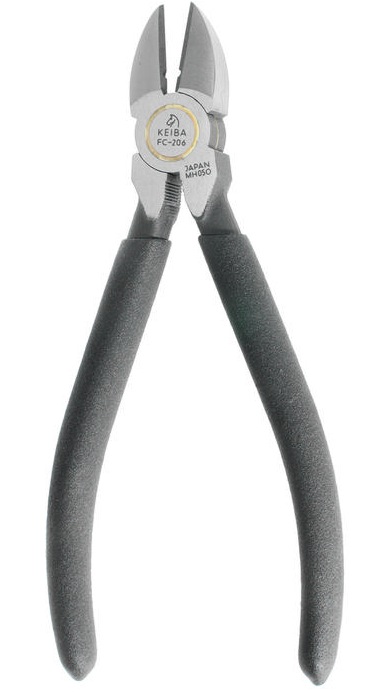
13. Wire Cutters
Wire cutters are pliers designed to cut wires and small nails. The “side-cutting” (unlike the stronger "end-cutting" style) style is handy, but not strong enough to cut small nails.


14. Respirator / Safety Mask
While paints and other coatings have become less toxic (and lead-free) over time, most still contain dangerous chemicals, which is why you should wear a mask to avoid accidentally getting them in your lungs. A mask should also be worn when working in dusty or dirty environments. Disposable masks usually come in packs of 10 and should be thrown away after use. Full and half-face respirators can be used to prevent the inhalation of very fine particles that ordinary facemasks will not not stop.

15. Duct Tape
This tape is extremely strong and adaptable. Originally, it was widely used to make temporary repairs to many types of military equipment. Today, it’s one of the key items specified for home emergency kits because it is water-resistant and extremely sticky.
In summary, the above is a list of tools that every homeowner should have.

This article is provided by International Association of Certified Home Inspectors.

Wednesday, November 11, 2009

Call on me for the Good, the Bad and the Ugly

I like houses. New or old, it doesn’t matter. I like to learn things about them and find out if they will be a good place for people to live with few problems. I’ve worn a tool pouch, swung a hammer, taken a home from blueprints to completed properties. Worked with architects, engineers, and owners.

I’m a good inspector and I can attribute that to my curious nature and my previously stated background. I’ve been in the construction business for most of my working life. In New York City, I was responsible for the layout of the skyscrapers as they came up out of the ground. After coming to Florida in 1989 I got my feet wet with single family construction. Then in 1992, I was push into graduate studies of single family housing courtesy of infamous Hurricane Andrew. I worked for homeowners as well as with insurance companies.

Because of my construction background, I know first hand what makes a structure strong and the consequences of poor building practices. I use this expertise to take my time and study things the homebuyer might never think of examining or might be too embarrassed to question. Having built both commercial and residential properties as a construction supervisor, I’ve seen how buildings progress. I know how shortcuts or poor building practices can become expensive, time consuming and disruptive annoyances in time.

So call on me the next time you want to find the good, bad or ugly in your home, I enjoy my work. Oh wait. Can you call it work when you enjoy it? Ha!

Sunday, November 8, 2009

Anti-Tip Brackets for Freestanding Ranges

By Nick Gromicko, Rob London and Kenton Shepard

Anti-tip brackets are metal devices designed to prevent freestanding ranges from tipping. They are normally attached to a rear leg of the range or screwed into the wall behind the range, and are included in all installation kits. A unit that is not equipped with these devices may tip over if enough weight is applied to its open door, such as that from a large Thanksgiving turkey, or even a small child. A falling range can crush, scald, or burn anyone caught beneath.

Bracket Inspection
Inspectors can confirm the presence of anti-tip brackets through the following methods:
It may be possible to see a wall-mounted bracket by looking over the rear of the range. Floor-mounted brackets are often hidden, although in some models with removable drawers, such as 30" electric ranges made by General Electric, the drawers can be removed and a flashlight can be used to search for the bracket. Inspectors should beware that a visual confirmation does not guarantee that the bracket has been properly installed.

Inspectors can firmly grip the upper-rear section of the range and tip the unit. If equipped with an anti-tip bracket, the unit will not tip more than several inches before coming to a halt. The range should be turned off, and all items should be removed from the stovetop before this action can be performed. It is usually easier to detect a bracket by tipping the range than through a visual search. This test can be performed on all models and it can confirm the functionality of a bracket.
If no anti-tip bracket is detected, inspectors should recommend that one be installed.

Clients can contact the dealer or builder who installed their range and request that they install a bracket. For clients who wish to install a bracket themselves, the part can be purchased at most hardware stores or ordered from a manufacturer. General Electric will send their customers an anti-tip bracket for free.

According to the U.S. Consumer Product Safety Commission (CPSC), there were 143 incidents caused by range tip-overs from 1980 to 2006. Of the 33 incidents that resulted in death, most of those victims were children. A small child may stand on an open range door in order to see what is cooking on the stovetop and accidentally cause the entire unit to fall on top of him, along with whatever hot items may have been cooking on the stovetop. The elderly, too, may be injured while using the range for support while cleaning. InterNACHI inspectors who inspect ovens should never leave the oven door open while he oven is unattended.
In response to this danger, the American National Standards Institute (ANSI) and Underwriters Laboratories (UL) created standards in 1991 that require all ranges manufactured after that year to be capable of remaining stable while supporting 250 pounds of weight on their open doors. Manufacturers' instructions, too, require that anti-tip brackets provided be installed. Despite these warnings, retailer Sears estimated in 1999 that a mere 5% of the gas and electric units they sold were ever equipped with anti-tip brackets. As a result of Sears’ failure to comply with safety regulations, they were sued and subsequently required to secure ranges in nearly 4 million homes, a measure that has been speculated to have cost Sears as much as $500 million.

In summary, ranges are susceptible to tipping if they are not equipped with anti-tip brackets. Inspectors should know how to confirm that these safety devices are present.

This article is courtesy of the International Association of Certified Home Inspectors. www.natchi.org