Friday, December 28, 2012

Eco-Friendly Relocation


by Nick Gromicko, Rob London and Kate Tarasenko


Relocation is often stressful and time-consuming, but rarely do we wonder about the impact the process has on the environment. This is amplified when moving to a smaller house or condominium, and additional decisions have to be made regarding items that must discarded in order to save space.  If we don’t make these decisions deliberately, our choices can generate a lot of trash, and waste energy and natural resources. Fortunately, we have other options so that, when the time comes, we can relocate -- along with our stuff -- responsibly.

Some measures to consider before moving day:
  • Buy less.  The less you accumulate, the less you will have to discard when it comes time to relocate. Also, fight the urge to be a pack rat by recycling and giving items away as they become obsolete to you. If you put off these decisions until the day you have to relocate, many of the things that you're on the fence about keeping will likely end up in the trash because you’ll be too preoccupied by the move to put the effort into thoughtful and responsible disposal. 
     
  • Discard items in a responsible manner, rather than merely throwing them away. Non-biodegradable trash doesn’t disappear; it just accumulates in new locations where it contaminates groundwater and soil, off-gasses methane and other greenhouse gasses, and overwhelms otherwise useful land. By taking a few extra steps, you can save money, help others, and minimize your impact on the environment.

    Sort through your belongings and decide what you don’t want to take with you, separating them into defined groups based on how best to dispose of them. For instance, separate your unwanted items that are in good working order, and can be reused by a friend or neighbor, from other items that require special disposal, such as hazardous chemicals or large, bulky items. See the following sections on how to identify items for reuse, recycling and special disposal. 

    • Recycle. With a minimum of effort, you can recycle old magazines and newspapers that you do not want to take with you to your new home. Glass, metal and plastics are also easily recyclable, and you will conserve some of the raw materials and energy required to produce these items by re-offering them. Many of the items you clean out from your home might be recyclable in your community curbside or drop-off recycling program. To determine what items you can recycle, contact your local environmental agency or waste-pickup service.
                    Common recyclables include: 
    • cardboard;
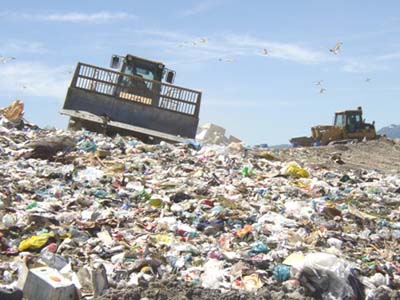
    • mixed paper;Trash doesn't just disappear
    • newspapers;
    • glass bottles and jars; 
    • plastic bottles and jugs; and
    • scrap aluminum and cans.
Many items can be dropped off for recycling at nearby locations, such as:
  • plastic grocery bags that are often accepted for recycling at grocery stores;
  • used electronics, such as cell phones and computers, which are collected for recycling at electronics stores, school vocational programs, and by municipal governments;
  • bulky consumer goods.  Your municipality, by special request or at designated times of the year, may collect appliances and other large discards, such as non-working refrigerators and broken furniture.
  • Sell.
    • Neighborhood yard sales are a fun way to get rid of items and make a little extra money.
    • Websites such as eBay, Craigslist and Freecycle provide ways to advertise online, often for free, in order to unload unwanted items.
    • Antiques can be cleaned and sold to antique and consignment shops.
 
  • Donate.  Try putting items on your curb with a “free” sign.  Or, take them to your local Salvation Army Store, ARC Store, DAV Store, Goodwill, women's shelter and homeless shelter as the items lose their usefulness to you.  Keep a spare bag in the trunk of your vehicle, and take the reusable items that you run across out to your car.  Before you know it, you will have a full bag to drop off at a thrift store or a collection drive.  Charitable donations to many non-profit organizations are often tax-deductible. Popular donated items include:
    • clothing and footwear;
    •  bedding, curtains and towels;
    • some toiletries;
    • books and magazines, which can be donated to your local school, library, or community or senior center;
    • furniture;
    • kitchenware and small, working appliances;
    • consumer electronics;
    • unwanted entertainment items, such as CDs, DVDs and video games;
    • larger items, such as computers, and stoves and refrigerators;
    • vehicles; and
    • unopened food items, which will be accepted at food banks and shelters.
 
  • Hire an environmentally conscious moving company. When searching for a professional service, select a competent expert who is concerned about nature and takes active steps in employing environmentally sound practices. Ask the company:
    • Do they encourage the use of used boxes rather than insisting that each customer pay for new 
      boxes? An environmentally conscious transporter should be happy to take the materials 
      from you after your move to pass on to his or her next customer. 
    • Are their vehicles fuel-efficient?  Ethanol-powered trucks are a bonus, although high mile-per- gallon diesel and gasoline trucks are positive choices, too.
    • Moving vehicles may also be fitted with devices that emit a sound to prevent animals from 
      wandering into the road. It may seem trivial, but moving vehicles spend a long time on the
      road, and these devices can and do save the lives of many animals. In Australia, they use
      “hopper stoppers” to protect kangaroos.  In much of the rest of the world, deer are a bigger
      problem.
  • If you don’t use a professional moving company, be smart about boxes and packing materials. Rather than buying these items new, which unnecessarily adds to the expense of moving, find them used. In most cases, old boxes work just as well as new boxes. Liquor stores, grocery stores, hardware and other retail stores are usually happy to give away large cardboard boxes they no longer need and would have to otherwise discard or recycle. Calling around first will save you frustration and the emissions of driving around town to individual stores. You can also ask friends and neighbors if they have materials you can have or borrow. Moving boxes are also popular “freebies” on Craigslist. By following this tip, you will have reduced the number of trees that must be chopped down and boxes that must be manufactured. Also, by reusing boxes and packing material, you keep them out of landfills. When you are finished moving, keep the packing materials for future use, or pass them on. 
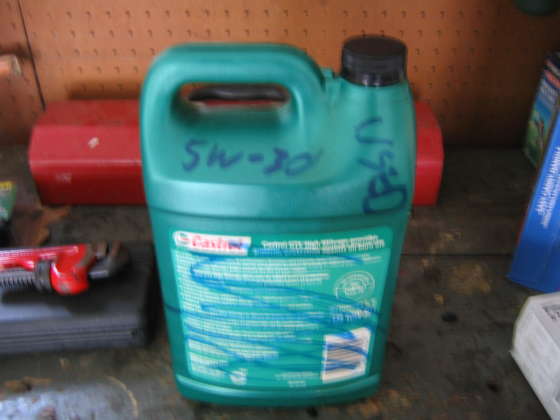
    Oil should be disposed of properly
  • Properly dispose of hazardous household items. While cleaning out and packing up the basement, garage or shed, you might run across some products such as cleaners, pesticides and paints, which are corrosive, flammable or otherwise dangerous to the environment and human health, if not disposed of properly. See if your community has special drop-off sites or holds periodic collection days for safe recycling and disposal of these products. Some stores offer free recycling for returned used goods at the point-of-purchase. 
          Common hazardous substances include:
    • cleaning supplies;
    • art and photographic supplies; 
    • spent printer cartridges; 
    • leftover paints, stains and varnishes; 
    • light bulbs and fluorescent tubes;
    • spent batteries for laptops, digital cameras and other personal electronics;
    • old car batteries; 
    • antifreeze; 
    • used motor oil; and 
    • pesticides and weed killer. 
Also, beware of hazardous chemicals that may contain gasoline, oil or other toxins. Local environmental agencies across the country have set up programs for homeowners to trade in their old gasoline-powered lawnmowers and electric gardening equipment. Contact your local solid waste collection outfit or environmental agency to inquire about these programs.
In summary, relocation is often hectic and expensive, but it doesn’t have to damage the environment.  You can also take easy steps to pare down your material belongings and keep them out of the landfill by reducing, reusing and recycling.


From Eco-Friendly Relocation - InterNACHI http://www.nachi.org/eco-friendly-relocation.htm#ixzz2GNRvni2e

Wednesday, December 19, 2012

Carbon Monoxide Poisoning and Detectors


by Nick Gromicko and Rob London 


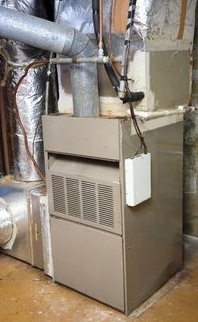
Carbon monoxide (CO) is a colorless, odorless, poisonous gas that forms from incomplete combustion of fuels, such as natural or liquefied petroleumFaulty furnaces are common sources of CO in indoor air  gas, oil, wood or coal.
 
Facts and Figures
  • 480 U.S. residents died between 2001 and 2003 from non-fire-related carbon-monoxide poisoning.
  • Most CO exposures occur during the winter months, especially in December (including 56 deaths, and 2,157 non-fatal exposures), and in January (including 69 deaths and 2,511 non-fatal exposures). The peak time of day for CO exposure is between 6 and 10 p.m.
  • Many experts believe that CO poisoning statistics understate the problem. Because the symptoms of CO poisoning mimic a range of common health ailments, it is likely that a large number of mild to mid-level exposures are never identified, diagnosed, or accounted for in any way in carbon monoxide statistics.
  • Out of all reported non-fire carbon-monoxide incidents, 89% or almost nine out of 10 of them take place in a home.
Physiology of Carbon Monoxide Poisoning
When CO is inhaled, it displaces the oxygen that would ordinarily bind with hemoglobin, a process the effectively suffocates the body. CO can poison slowly over a period of several hours, even in low concentrations. Sensitive organs, such as the brain, heart and lungs, suffer the most from a lack of oxygen.
High concentrations of carbon monoxide can kill in less than five minutes. At low concentrations, it will require a longer period of time to affect the body. Exceeding the EPA concentration of 9 parts per million (ppm) for more than eight hours may have adverse health affects. The limit of CO exposure for healthy workers, as prescribed by the U.S. Occupational Health and Safety Administration, is 50 ppm.
 
Potential Sources of Carbon Monoxide

Any fuel-burning appliances which are malfunctioning or improperly installed can be a source of CO, such as:
  • furnaces;
  • stoves and ovens;
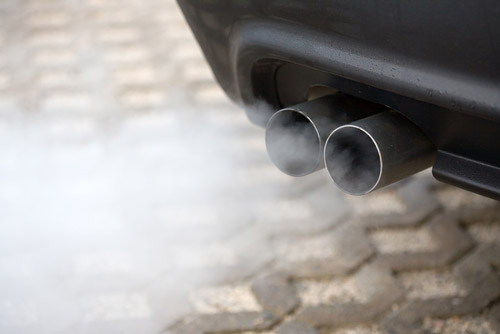
  • water heaters;Cars should never be left running in a garage
  • dryers; 
  • room and space heaters; 
  • fireplaces and wood stoves;
  • charcoal grills;
  • automobiles;
  • clogged chimneys or flues;
  • space heaters;
  • power tools that run on fuel;
  • gas and charcoal grills;
  • certain types of swimming pool heaters; and 
  • boat engines.


PPM
% CO
in air
Health Effects in Healthy Adults
Source/Comments
0
0%
no effects; this is the normal level in a properly operating heating appliance

35
.0035%
maximum allowable workplace exposure limit for an eight-hour work shift
The National Institute for Occupational Safety and Health (NIOSH)
50
.005%
maximum allowable workplace exposure limit for an eight-hour work shift
              OSHA
100
.01%
slight headache, fatigue, shortness of breath,
errors in judgment

125
.0125%

workplace alarm must sound (OSHA)
200
.02%
headache, fatigue,
nausea, dizziness

400
.04%
severe headache, fatigue, nausea, dizziness, confusion; can be life-threatening after three hours of exposure
evacuate area immediately
800
.08%
convulsions, loss of consciousness;
death within three hours.
evacuate area immediately
12,000
1.2%
nearly instant death


CO Detector Placement

CO detectors can monitor exposure levels, but do not place them:
  • directly above or beside fuel-burning appliances, as appliances may emit a small amount of carbon monoxide upon start-up;
  • within 15 feet of heating and cooking appliances, or in or near very humid areas, such as bathrooms;
  • within 5 feet of kitchen stoves and ovens, or near areas locations where household chemicals and bleach are stored (store such chemicals away from bathrooms and kitchens, whenever possible);
  • in garages, kitchens, furnace rooms, or in any extremely dusty, dirty, humid, or greasy areas;
  • in direct sunlight, or in areas subjected to temperature extremes. These include unconditioned crawlspaces, unfinished attics, un-insulated or poorly insulated ceilings, and porches;
  • in turbulent air near ceiling fans, heat vents, air conditioners, fresh-air returns, or open windows. Blowing air may prevent carbon monoxide from reaching the CO sensors.
Do place CO detectors:
  • within 10 feet of each bedroom door and near all sleeping areas, where it can wake sleepers. The Consumer Product Safety Commission (CPSC) and Underwriters Laboratories (UL) recommend that every home have at least one carbon monoxide detector for each floor of the home, and within hearing range of each sleeping area;
  • on every floor of your home, including the basement (source:  International Association of Fire Chiefs/IAFC);
  • near or over any attached garage. Carbon monoxide detectors are affected by excessive humidity and by close proximity to gas stoves (source:  City of New York);
  • near, but not directly above, combustion appliances, such as furnaces, water heaters, and fireplaces, and in the garage (source:  UL); and
  • on the ceiling in the same room as permanently installed fuel-burning appliances, and centrally located on every habitable level, and in every HVAC zone of the building (source:  National Fire Protection Association 720). This rule applies to commercial buildings.
In North America, some national, state and local municipalities require installation of CO detectors in new and existing homes, as well as commercial businesses, among them:  Illinois, Massachusetts, Minnesota, New Jersey, Vermont and New York City, and the Canadian province of Ontario. Installers are encouraged to check with their local municipality to determine what specific requirements have been enacted in their jurisdiction.
How can I prevent CO poisoning?
  • Purchase and install carbon monoxide detectors with labels showing that they meet the requirements of the new UL standard 2034 or Comprehensive Safety Analysis 6.19 safety standards.
  • Make sure appliances are installed and operated according to the manufacturer's instructions and local building codes. Have the heating system professionally inspected by an InterNACHI inspector and serviced annually to ensure proper operation. The inspector should also check chimneys and flues for blockages, corrosion, partial and complete disconnections, and loose connections.
  • Never service fuel-burning appliances without the proper knowledge, skill and tools. Always refer to the owner's manual when performing minor adjustments and when servicing fuel-burning equipment.
  • Never operate a portable generator or any other gasoline engine-powered tool either in or near an enclosed space, such as a garage, house or other building. Even with open doors and windows, these spaces can trap CO and allow it to quickly build to lethal levels.
  • Never use portable fuel-burning camping equipment inside a home, garage, vehicle or tent unless it is specifically designed for use in an enclosed space and provides instructions for safe use in an enclosed area.
  • Never burn charcoal inside a home, garage, vehicle or tent.
  • Never leave a car running in an attached garage, even with the garage door open.
  • Never use gas appliances, such as ranges, ovens or clothes dryers to heat your home.
  • Never operate un-vented fuel-burning appliances in any room where people are sleeping.
  • During home renovations, ensure that appliance vents and chimneys are not blocked by tarps or debris. Make sure appliances are in proper working order when renovations are complete.
  • Do not place generators in the garage or close to the home. People lose power in their homes and get so excited about using their gas-powered generator that they don't pay attention to where it is placed. The owner's manual should explain how far the generator should be from the home.
  • Clean the chimney. Open the hatch at the bottom of the chimney to remove the ashes.  Hire a chimney sweep annually.
  • Check vents. Regularly inspect your home's external vents to ensure they are not obscured by debris, dirt or snow.
 
In summary, carbon monoxide is a dangerous poison that can be created by various household appliances. CO detectors must be placed strategically throughout the home or business in order to alert occupants of high levels of the gas.


From Carbon Monoxide Poisoning and Detectors - InterNACHI http://www.nachi.org/carbon-monoxide.htm#ixzz2FYPy3Zwn

Wednesday, December 5, 2012

Buying a Foreclosure


by Nick Gromicko and Rob London 


Purchasing foreclosed homes in desirable areas at below-market values can be a sound investment strategy. Appreciation on their original prices may be tax-free.  Buying foreclosed rental properties can provide positive cash flow, as well as valuable tax deductions. On the other hand, buying a foreclosure involves homework, patience, and a certain amount of luck. For those wishing to get a bargain house through the foreclosure process, it’s best to learn the basics.Foreclosed homes are often sold at auction
 
Four Ways to Buy a Foreclosed Home
  • presale is when the prospective buyer negotiates with the current owner before the house is foreclosed upon. Presale discounts can be considerable, but communicating and reasoning with the owner isn’t always easy; they might have legal problems, lost their phone service or electricity, or greet you with suspicion, having already been hounded and threatened by creditors. And after time and energy have been invested, the deal can fall through if the owner comes up with the money to repay their debt, or for any number of unexpected reasons. With persistence, however, the seasoned real estate investor can profit from presales. To find out about presales, you can try one of the following avenues:
    • Ask your local county court how to search new notices of default.
    • Find out if the County Recorder has data available online.
    • Look in the "legal notices" section of the newspaper for properties that are coming up for sale at public auction. Take note of the address, the property owner’s name, the tax ID, and whatever other information is contained in the ad.
  • A foreclosed home may be sold at a public auction, in which buyers can expect a discount of 10% to 25% of market value. Interested bidders are generally required to show proof of financing, and must have a minimum cash deposit before they are qualified to bid. It might be impossible to gain entry to inspect the interior, too, which makes this type of purchase risky. The local building department may have permit records that can clue you in to the building’s layout and appearance.
  • real estate-owned (REO) sale is a transaction where a foreclosed house is purchased directly from the bank. These properties typically wound up in the bank’s portfolio after failing to sell at auction. REO investments are relatively safe, as there are no tenants to evict or hidden liens and, unlike properties sold at public auction, buyers can usually receive a mortgage to pay for them. And purchasers might even get an unused house; the slow economy has left many builders at the end of their construction-loan periods without finding buyers for the homes, in which case the bank will foreclose on the brand new homes. Unfortunately, REOs are usually offered at near-market prices to recoup the costs of property taxes, maintenance and legal fees. To find REOs, try the following:
    • Check lenders’ websites, as they may have a list of their REOs, along with contact information for the appropriate real estate agent.
    • Call lenders and ask to speak to someone who handles their foreclosures.
    • Check newspapers.
  • The Department of Housing and Urban Development has tens of thousands of HUD homes whose previous owners defaulted on federally issued loans. After a period during which local governments gain exclusive buying privileges, they become available to individual buyers who pledge to live in the property. After another 10 days, investors may bid on the property. It’s difficult to make a profit on these houses, as HUD releases them at near-market values.
Tips for Foreclosure Purchases
  • Invest time in research and preparation. Those new to the field should spend some time learning the variables of foreclosure investing before making any purchases.
  • Budget carefully to prepare for the unexpected. The house may require unforeseen repairs, such as a leaky roof or unstable deck. The price tag of the home itself is often just the first of a series of fees. What if you planned on rental cash flow to cover the mortgage, but you can’t find a tenant?
  • Avoid buying a foreclosure sight-unseen. Try to see the house yourself before buying it, or hire someone to evaluate at it in your absence. Distant investors are buying up properties unseen in bulk, and they’re often unpleasantly surprised at how much they’ve been misled.
  • Evaluate the neighborhood. If the foreclosure is rife with problems, but it’s in a desirable area with high property resale values, it may still be worth it to make a low offer. An area with several foreclosures or a high crime rate can undermine an otherwise good deal, however.
  • Consider how long the house has been vacant. Building damage – and the costs required to make the house livable - generally increases with the time that has lapsed since the last tenant vacated. Pests are a particular issue in houses that have been empty for a long time, and plumbing defects and leaks increase in likelihood in such homes, as well.
  • Examine the landscaping. Left unchecked, trees can send their roots into the foundation, and vines can creep into the windows.
  • Has the house been professionally inspected by an InterNACHI inspector? Foreclosures can be notorious for damage suffered at the hands of past tenants, through both inadvertent and intentional vandalism and theft.

In summary, there are a number of ways to go about buying a foreclosed home, and buyers should exercise patience, persistence and careful planning before buying foreclosed properties.


From Buying a Foreclosure - InterNACHI http://www.nachi.org/buying-foreclosure.htm#ixzz2EEa2lCtp